
Six Long Winters
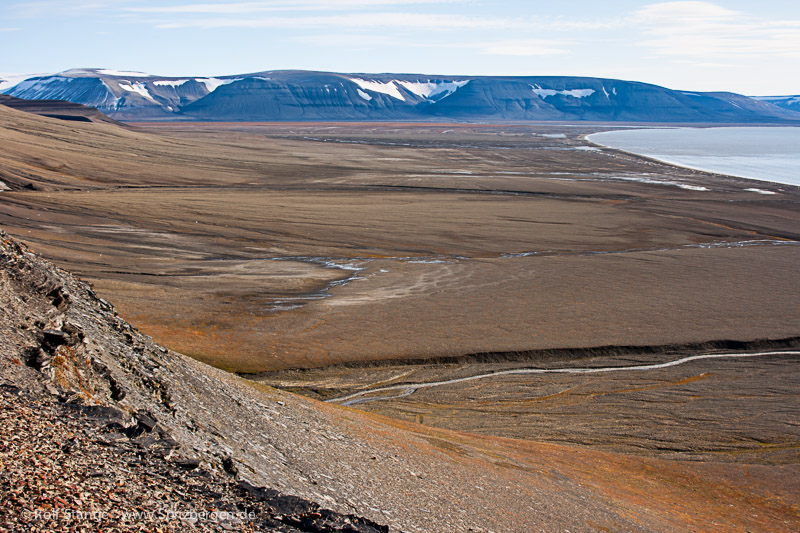
In May 1743, a Russian vessel carrying fourteen men became trapped in ice near Edgeøya (pronounced Ed-goy-ah), off the south-eastern coast of Spitsbergen.
Fearing the ship would be crushed, four men crossed two miles of moving ice to find a hunters' hut that one of the men had heard about.
They took one gun, twelve rounds, an axe, knife, kettle, flour, tinderbox, tobacco and their pipes.
When they returned to the shore the next morning, the ice, ship and ten men were gone. They didn’t know if they had been abandoned or if something had happened to the ship.
They spent the rest of their time on Edgeøya never knowing the answers, but the ship was never heard of again.
Their twelve shots killed twelve reindeer. When the ammunition ran out, they made a bow from a fir root washed ashore, using polar bear sinew for the string. Driftwood became arrows and wreckage provided iron for the tips and spears.
With no proper tools, they turned an iron hook into a hammer and used a large stone as an anvil. They used clay to make a lamp fuelled by reindeer fat and kept it burning continuously, knowing that if the fire went out, damp driftwood might make it impossible to relight.
When rope for the wicks ran out, they burned strips of their clothing and replaced their clothes with reindeer and fox skins, sewn with sinew and a needle they made from iron.
They ate raw frozen meat and Arctic grass. They also drank the warm blood of the animals they killed which provided vital nutrients. Food was smoked in the roof of their chimneyless hut.
They hunted, repaired the hut, prepared skins, made clothes and tools and kept the fire alive. During Fedor Verigin's final year, when he became too weak, the other three nursed him.
The frozen ground made burial impossible, so the others buried him deep in the snow and covered his body to protect it from polar bears.
Each man lived with the fear that he might outlive the others and eventually be left alone.
In winter, snow sometimes buried the hut and they climbed out through the roof.
In August 1749, the remaining three spotted a Russian ship. They lit fires and raised a flag made from reindeer hide.
They had to negotiate their passage home and agreed to pay eighty rubles, the equivalent of several years’ pay. In addition, they agreed to work aboard the ship and give up all their possessions, including hides, reindeer fat and the tools they had made. Among them was their handmade needle, kept in a small box they had carved from bone.
They reached Archangel on 28 September 1749. Six years and three months after they had left. Without a clock, they had used an improvised astronomical instrument and religious feast days to keep track of time. The calendar they kept was only a few days out.
Edgeøya (Song Lyrics by Imelda Kehoe)
None of us want to be
The last man here
Or to see
Our numbers lessen.
Make a bow from a fir.
Washed on the shore
And keep
The lamp burning
To starve or be killed.
To die from the cold.
Did they leave.
Or were they taken?
When we returned
Our ship was gone.
Now to survive
On Ed-goy-ah
To hunt or be hunted.
And stay alive
We found clay and
Counted the days.
Made arrows from nails,
And the wreckage
Of our minds, take care
On Ed-goy-ah
photo credit: https://www.spitsbergen-svalbard.com/photos-panoramas-videos-and-webcams/spitsbergen-photos/photos-edgeoya.html